







文章目录
Product Overview:

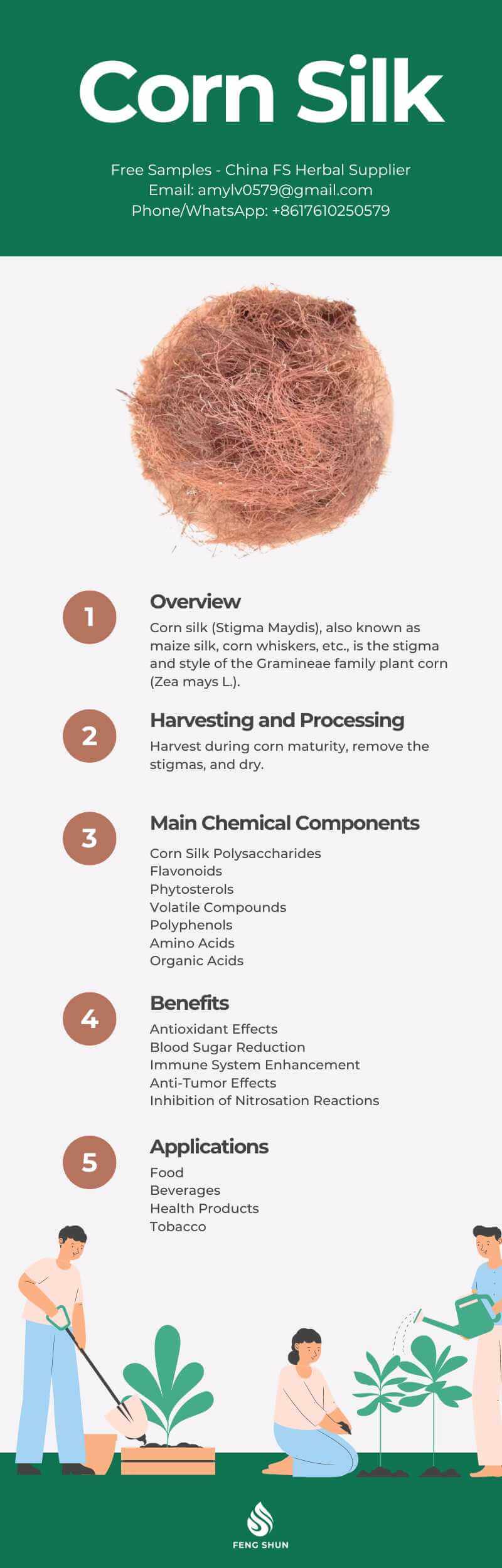
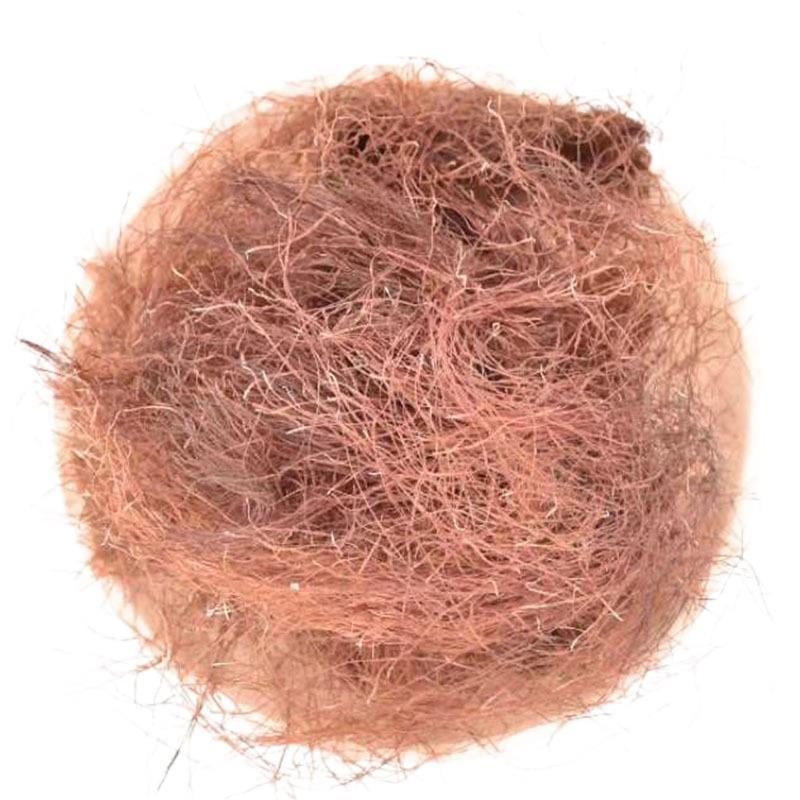
Corn silk (Stigma Maydis), also known as maize silk, corn whiskers, etc., is the stigma and style of the Gramineae family plant corn (Zea mays L.). It is produced nationwide, harvested in summer and autumn when the fruit is mature, and impurities are removed. It can be used fresh or dried. Corn silk often gathers into loose clusters, with the stigmas appearing filamentous or silky. Complete strands can reach up to 30 cm in length, with a diameter of 0.5 mm, and range from light green, yellow-green to reddish-brown in color, with a glossy, slightly translucent appearance. The quality is considered better when soft and shiny.
Corn silk is widely used in various food industries, primarily in functional foods, solid beverages, pressed candy, meal replacement powders, drinks, chewable tablets, etc.
Harvesting and Processing:
Harvest during corn maturity, remove the stigmas, and dry.
Main Chemical Components:
Corn silk is rich in various beneficial substances, including polysaccharides, oligosaccharides, phytosterols, corn yellow pigment, alkaloids, flavonoids, polyphenols, etc. Corn silk contains 2.5% fatty oil, 0.12% volatile oil, 3.8% gum-like substances, 2.7% resin, 1.15% bitter glycosides, 3.18% saponins, and 0.05% alkaloids. It also contains cryptoxanthin, vitamin C, pantothenic acid, inositol, vitamin K, sitosterol, stigmasterol, malic acid, citric acid, tartaric acid, oxalic acid, and large amounts of potassium nitrate (KNO3), and α-tocopherylquinone.
- Corn Silk Polysaccharides:
The monosaccharide composition of corn silk polysaccharides includes mannose, galactose, xylose, arabinose, and fructose. These polysaccharides are non-toxic and safe, showing physiological activities such as blood sugar reduction, anti-cancer effects, and immune enhancement.
- Flavonoids:
- Phytosterols:
- Volatile Compounds:
A total of 42 components have been identified, with major ones including heneicosane (6.53%), nonacosane (10.70%), hexatriacontane (4.11%), ethyl linoleate (3.57%), sitosterol (6.67%), β-sitosterol (7.89%), and stigmasterol (6.82%).
- Polyphenols:
Corn silk contains 1.26 mg·g-1 of total polyphenols, including quercetin, chlorogenic acid, catechin, caffeic acid, ferulic acid, and root bark glycoside.
- Amino Acids:
Corn silk contains 16 amino acids, 8 of which are essential for the human body, including histidine, leucine, isoleucine, lysine, methionine, phenylalanine, threonine, and valine.
- Organic Acids:
Total polyphenols in corn silk are 1.26 mg·g-1, mainly including quercetin, chlorogenic acid, catechin, caffeic acid, ferulic acid, and root bark glycoside.
Benefits and Uses:
Corn silk is sweet and neutral in nature, offering benefits such as swelling reduction, diuresis, blood sugar reduction, blood pressure reduction, antibacterial effects, and immune enhancement. It is traditionally used to improve conditions such as nephritis edema, diabetes, jaundice hepatitis, hypertension, cholecystitis, gallstones, beriberi, acute urethritis, and cystitis.
Currently, the health benefits of corn silk are increasingly recognized both domestically and internationally. People often brew, boil, or stew corn silk into tea, soups, or porridges, or use it as the main ingredient in health drinks or tablets combined with other traditional Chinese medicines for the prevention and treatment of certain diseases. For instance, in China, corn silk is commonly boiled into soup and consumed as a tea (without salt) for treating edema, nephritis, and diabetes.
- Antioxidant Effects:
Active substances in corn silk exhibit significant antioxidant effects. Studies have shown that ethanol extracts of corn silk have antioxidant properties, with 80% ethanol extract showing the strongest antioxidant activity.
- Blood Sugar Reduction:
Research indicates that corn silk polysaccharide-5 (SMP-5) significantly counters adrenaline and glucose-induced hyperglycemia, reduces blood sugar levels, increases liver glycogen, and improves lipid metabolism disorders.
- Immune System Enhancement:
Carbohydrate components in corn silk are beneficial for the immune system. Experiments have demonstrated that polysaccharides in corn silk can regulate the humoral immune system and enhance macrophage phagocytosis without immunosuppressive effects.
- Anti-Tumor Effects:
Studies have shown that corn silk carbohydrate extracts inhibit cancer cell growth and can induce apoptosis in tumor cells.
- Inhibition of Nitrosation Reactions:
Corn silk extracts can block the synthesis of N-nitrosamines, a carcinogen, and remove existing nitrosamines, with the blocking and removal abilities being concentration-dependent.
Applications:
1) Food:
- Solid Beverages: Corn peptide compound drinks, corn silk solid beverages, etc.
- Tea Bags: Corn silk and mulberry leaf tea, corn silk hypertension reduction tea, etc.
- Common Foods: Corn silk porridge, corn silk noodles, etc.
2) Beverages:
A popular beverage is the "Corn Silk Tea" from the Genki Forest Fiber Tea series.
3) Health Products
4) Tobacco:
Analysis of corn silk extracts and their application in cigarettes shows that they can increase aroma, mask unpleasant odors, and improve the sweetness of smoke.
Plant Source:

Corn, belonging to the Gramineae family and Zea mays species, is commonly known as maize, corn cob, etc. Originating from Latin America, specifically Mexico and Peru, it was introduced to Spain by Columbus in 1499 and gradually spread worldwide, becoming one of the most important food crops. Corn is rich in protein, fat, vitamins, trace elements, and polysaccharides, offering significant potential for developing highly nutritious, biologically functional foods.
Corn is often called a longevity food, as it is rich in proteins, fats, vitamins, trace elements, fibers, and polysaccharides, giving it great potential for developing highly nutritious and biologically functional foods.
Plant Characteristics: Corn is an annual tall herb. The stalk is upright, usually unbranched, and grows 1-4 meters tall, with aerial prop roots at the base of each node. The leaf sheath has transverse veins; the ligule is membranous, about 2 mm long; the leaf blade is flat, broad, linear-lanceolate, with a rounded, ear-like base, either hairless or sparsely soft-haired. The midrib is thick, and the edges are slightly rough. The male flowers form large terminal panicles, with the main axis and the raceme axis covered in fine soft hairs. The male spikelets are paired, up to 1 cm long, with one spikelet stalk longer (1-2 mm) and the other shorter (2-4 mm), both covered in fine soft hairs. The two glumes are nearly equal in length, membranous, with about 10 veins and ciliated. The outer and inner glumes are transparent and slightly shorter than the glumes. The anthers are orange-yellow and about 5 mm long. Female flowers are hidden by numerous broad sheath-like bracts. Female spikelets are paired, arranged in 16-30 vertical rows on the thick axis. The two glumes are equal in length, wide, veinless, and ciliated. The outer and inner glumes are transparent. The pistil has extremely long, slender, thread-like styles. The caryopsis is spherical or slightly flattened, protruding beyond the glumes and lemmas when mature. Its size varies with growing conditions, generally 5-10 mm long, slightly wider than it is long, with the embryo taking up 1/2 to 2/3 of the caryopsis. The chromosome number is 2n = 20, 40, 80 (Sarma et Sharma, 1986; Molina, 1986). The flowering and fruiting period is in the fall.
Distribution: Corn resources are abundant and cultivated worldwide. It is also a key food crop in China, primarily grown in Sichuan, Hebei, Shandong, Shanxi, and the northeastern regions. China's corn production accounts for about 20% of the total grain yield, ranking second globally. The corn planting area in China is about 350 million mu, with an average of 3,000 plants per mu. It is estimated that each corn plant can yield about 15g of dry corn silk, putting China's annual corn silk production at over 7.5 million tons.
Growing Environment: Corn prefers high temperatures and requires significant water. It thrives in loose, fertile soil and is an annual cultivated plant.
Main Value: A staple food for human survival, corn is one of the primary sources of carbohydrate nutrition.
Consumption Method: Primarily boiled for eating.
Corn Silk Infographic