







文章目录
Product Introduction

This product is the dried aerial parts of the peppermint plant, Mentha haplocalyx Briq. Collected in summer and autumn when the stems and leaves are lush or in bloom, harvested on sunny days in batches, and then dried or air-dried.
Processing and Slices
Processing Method
Remove old stems and impurities, lightly spray with clean water to moisten, cut into short segments, and promptly dry at low temperature.
Medicinal Properties (Pharmacopoeia)
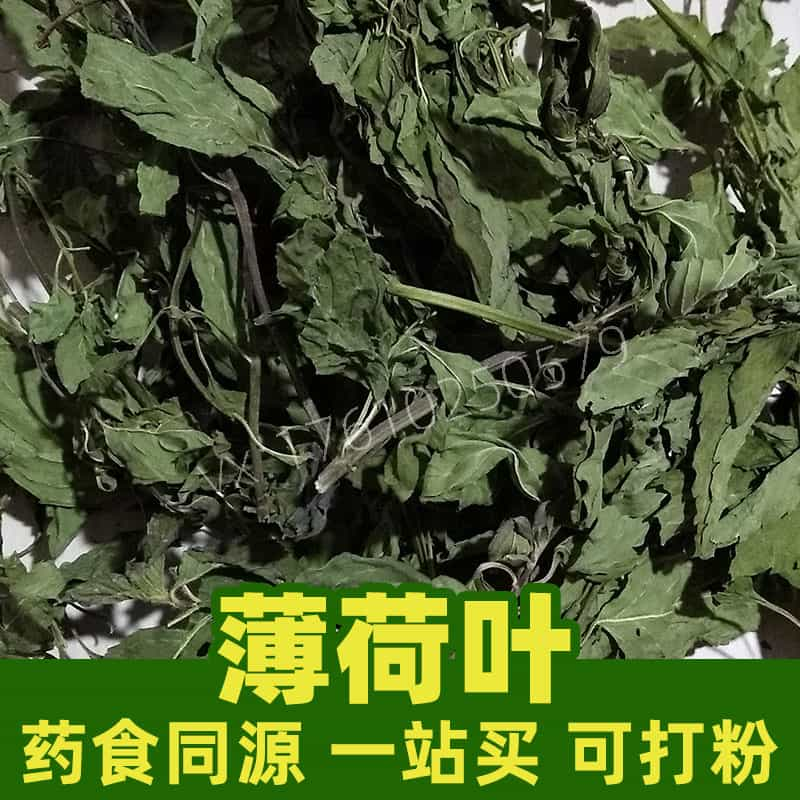
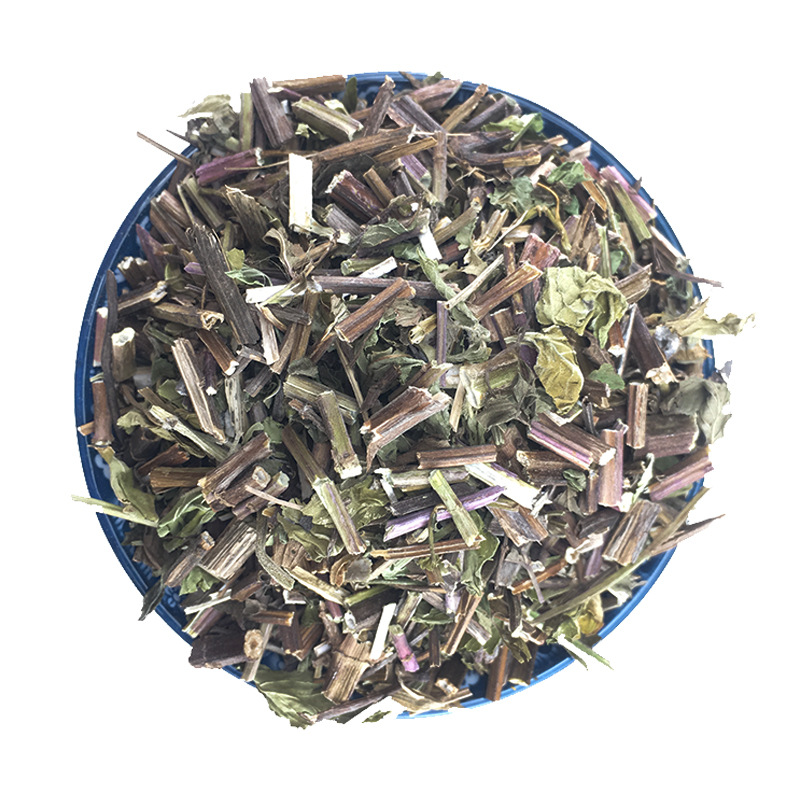
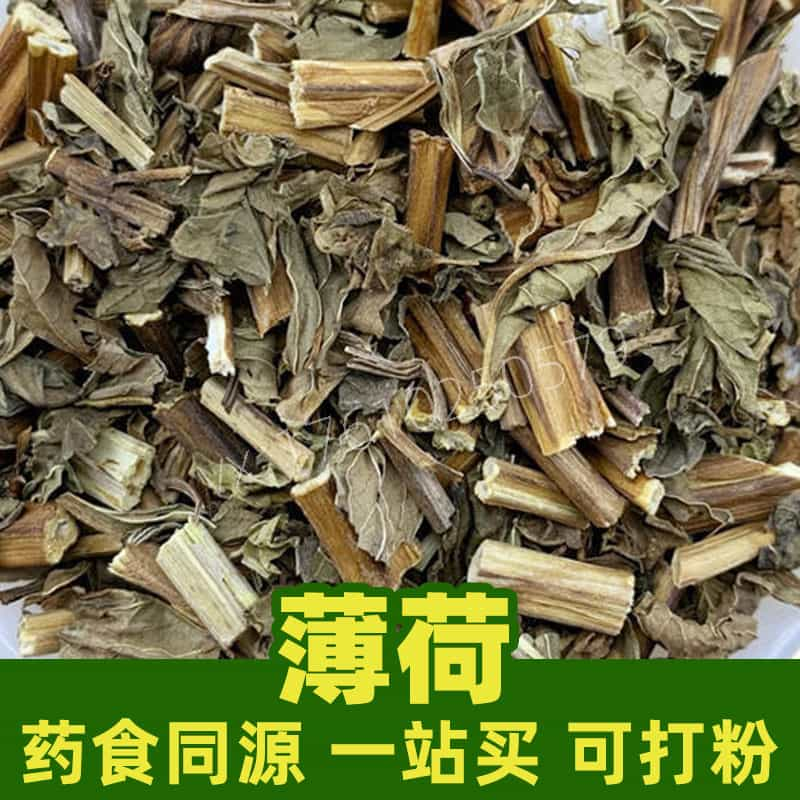
The product appears as irregular segments. Stems are square-cylindrical, with a purple-brown or light green surface, featuring longitudinal ridges and short hairs at the ridges. The cross-section is white and hollow. Leaves are mostly fragmented, with the upper surface dark green and the lower surface gray-green, sparsely covered with hairs. The inflorescence is a cyme, with a bell-shaped calyx, 5-lobed at the tip, and a light purple corolla. After rubbing, it emits a special cool aroma with a spicy and cool taste.
Stems are square-cylindrical with opposite branches, 15–40 cm long, and 0.2–0.4 cm in diameter; surface is purple-brown or light green with hairs at the angles, internodes 2–5 cm long; brittle texture with a white cross-section and hollow pith. Leaves are opposite, with short petioles; leaf blades are wrinkled and curled, and when flattened, they are broadly lanceolate, elongated oval, or ovate, 2–7 cm long and 1–3 cm wide; upper surface dark green, lower surface gray-green, sparsely covered with hairs, with glandular scales. The inflorescence is a cyme, with a bell-shaped calyx, 5-lobed at the tip, and a light purple corolla. After rubbing, it emits a special cool aroma with a spicy and cool taste.
Main Chemical Components
Contains essential oil, primarily menthol and menthone, as well as menthyl acetate, limonene, pinene, isomenthone, camphene, menthone ketone, resin, and small amounts of tannins, rosmarinic acid, etc.
Benefits and Uses
- Edible Value: Peppermint can be used as a flavoring agent, spice, and in beverages or teas.
- Medicinal Value: Peppermint is a commonly used Chinese herbal medicine. Tender stem tips can be eaten as vegetables, and the whole herb can be used to treat colds, fevers, sore throat, headaches, red eyes, muscle pain, skin rashes, and measles. It is also effective for boils, ulcers, scabies, eczema, and lacquer sores. Peppermint contains menthol, which can refresh breath and has various medicinal properties, including relief from abdominal pain, gallbladder issues such as cramps, as well as antimicrobial, diuretic, expectorant, digestive, and appetite-stimulating effects. Excessive consumption can cause insomnia, but small amounts can aid sleep.
Applications: Traditional Chinese Medicine, Health Supplements, Food
- Traditional Chinese Medicine: Menthol, heat-clearing and stagnation-relieving granules.
- Health Supplements: Herbal mint lozenges.
- Food: Peppermint candies.
Original Plant
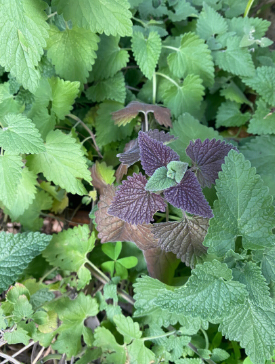
Peppermint, known in traditional Chinese medicine as “Yindan grass,” belongs to the Lamiaceae family. It is a plant with aromatic qualities and economic value, commonly found in wetland and riverside areas. Its underground rhizomes spread horizontally, making it a plant with special economic value. Peppermint is used as a diaphoretic and antipyretic, effective for influenza, headaches, red eyes, fever, sore throat, and gum pain. Fresh peppermint from well-lit greenhouses is also a refreshing vegetable on the New Year’s table. Peppermint is often used as a tea substitute, clearing the mind and improving vision. In China, the largest production of peppermint is in Jiangsu and Anhui provinces.
Peppermint is a perennial herb with upright stems, 30–1500 cm high. The lower part has fine fibrous roots and horizontal creeping rhizomes. The stems are square-shaped with ridges, covered with fine hairs on the upper part and fewer on the lower part. The flowering period is from June to September, with fruiting in October. It grows in moist, waterside environments and can reach altitudes of up to 3500 m. Peppermint adapts well to temperature changes, with rhizomes surviving winter temperatures as low as -15°C. Optimal growth occurs at 25°C–30°C, with growth slowing below 15°C and accelerating above 20°C. In the 20°C–30°C range, higher temperatures promote faster growth, provided water and nutrients are adequate. Peppermint prefers long daylight hours, which stimulate flowering and enhance the accumulation of peppermint oil and menthol. It is not very demanding regarding soil but grows best in sandy loam or alluvial soil with a pH of 6–7.5. There are at least 600 varieties of peppermint worldwide due to its wide distribution, strong adaptability, and ability to hybridize in natural environments. Classification can be based on stem color or leaf shape, with types including purple-stemmed and green-stemmed varieties. Purple-stemmed peppermint usually has a stronger aroma than green-stemmed peppermint.
Storage and Maintenance
Peppermint is generally packed in compressed bales, each weighing 45 kg. Store in a cool, dry, and dark warehouse, with temperatures below 28°C and relative humidity at 70–75%. The product should have a moisture content of 11–13%.
Peppermint contains essential oils that can easily dissipate, and it is susceptible to pests and mold. Moldy peppermint will show mold spots and lose its aroma; insufficient moisture causes it to dry out and affect quality. Common pests include the Indian meal moth, which can often be found in the stems and leaves, with silk and excrement present.
Do not store for too long, typically around one year. If it becomes damp and warm, promptly re-stack and air out or ventilate, but avoid direct sunlight. For severe pest infestations, use aluminum phosphide for fumigation.