







文章目录
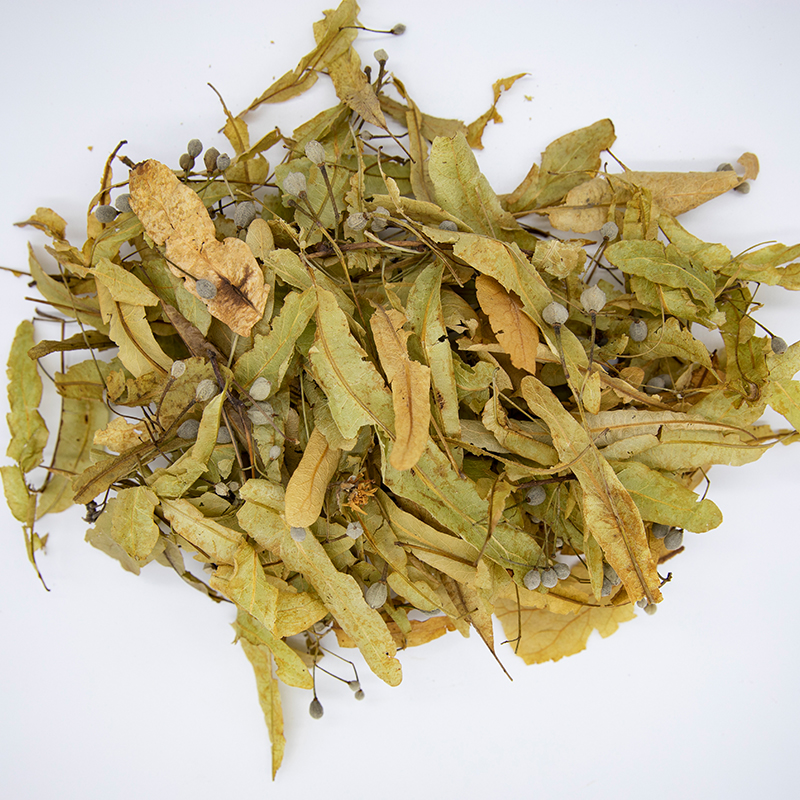
Tilia tuan Szyszyl Overview

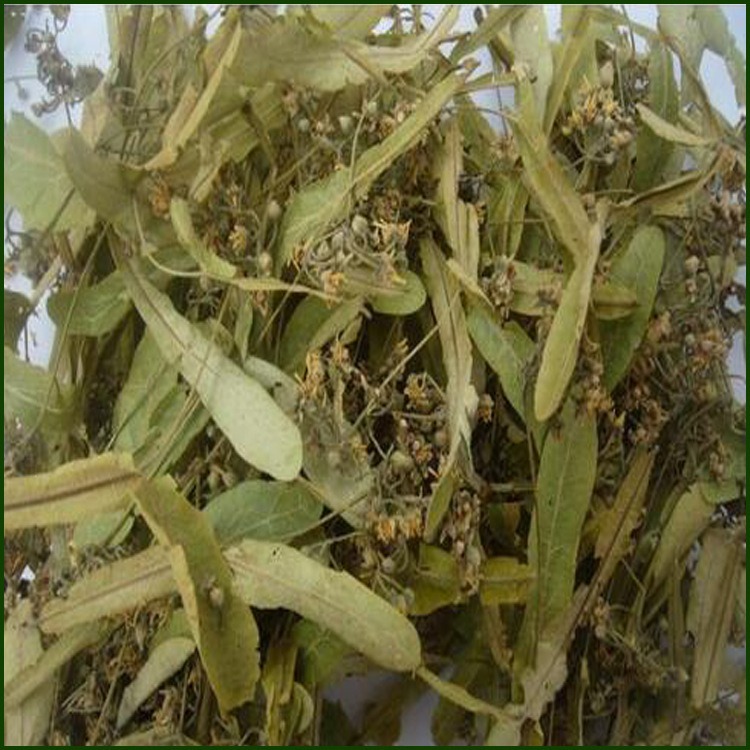
Also known as the linden flower.
Origin: Changbai Mountains in Northeast China, Xiaoxing'an Mountains, Wanda Mountains, and provinces like Hebei and Shanxi.
Flowering Period: The Tilia tree blooms in May and June each year, with a flowering period of about a month, depending on the weather.
Harvest: Wild harvesting takes place in mid-July. Tilia trees range from 3 to 10 meters in height, and each large tree can yield 20-50 kilograms of dried flowers. Skilled workers can harvest 10-20 kilograms of dried flowers per day.
Varieties: Tilia flowers are divided into large-leaf Tilia (Kang Tilia) and small-leaf Tilia (Purple Tilia), mainly differing in appearance and taste.
Large-leaf Tilia - Kang Tilia: Large leaves with flowers hanging down, blooming about 10 days later than small-leaf Tilia.
Small-leaf Tilia - Purple Tilia: Small leaves with flowers facing upwards, blooming at the end of June.
Flavor: Similar to jasmine, with a light fragrance.
Main Chemical Components
The inflorescence contains a large amount of mucilage and essential oils, with acacia alcohol and a glycoside that promotes sweating as the main components.
Effects and Uses
Promotes sweating and relieves surface conditions; analgesic and antispasmodic. Mainly used for treating colds, headaches, and body pain.
Yi Medicine: "Buluwei": Treats abdominal pain and vaginal discharge in women due to coldness; the fruit and leaves are used to treat lower back pain, rheumatism, and joint pain.
Lishi Zhen noted that Tilia is effective for treating "three worms," reducing indigestion, and is beneficial for feeding children with porridge made from its juice. The modern use of its branches and leaves in medicine for treating children's digestive issues aligns with traditional uses.
Applications: Traditional Chinese Medicine, Food
Internationally, it is primarily used in tea, food, medicine, and skincare products.
The flowers contain nectar glands, making them a valuable source of honey. The fiber from the bark can be used to make sacks, ropes, and artificial cotton, and can also serve as a fuse for gunpowder and be used in weaving straw shoes. The flowers can be used to extract essential oils, the leaves can be fed to pigs, and the wood is white, light, and soft, making it excellent for lumber. Its fine texture makes it a primary material for plywood and can also be used to make cabinets or for wood engraving, as well as for various tools like wooden shovels, steamers, and rings.
Tilia is also an excellent nectar source, providing significant income for beekeepers.
With its beautiful shape, fragrant flowers, and strong resistance to harmful gases, Tilia is an ideal tree for landscaping.
Plant Source
Distribution:
Found in Hubei, Sichuan, Yunnan, Guizhou, Guangxi, Hunan, and Jiangxi provinces.
Morphological Characteristics:
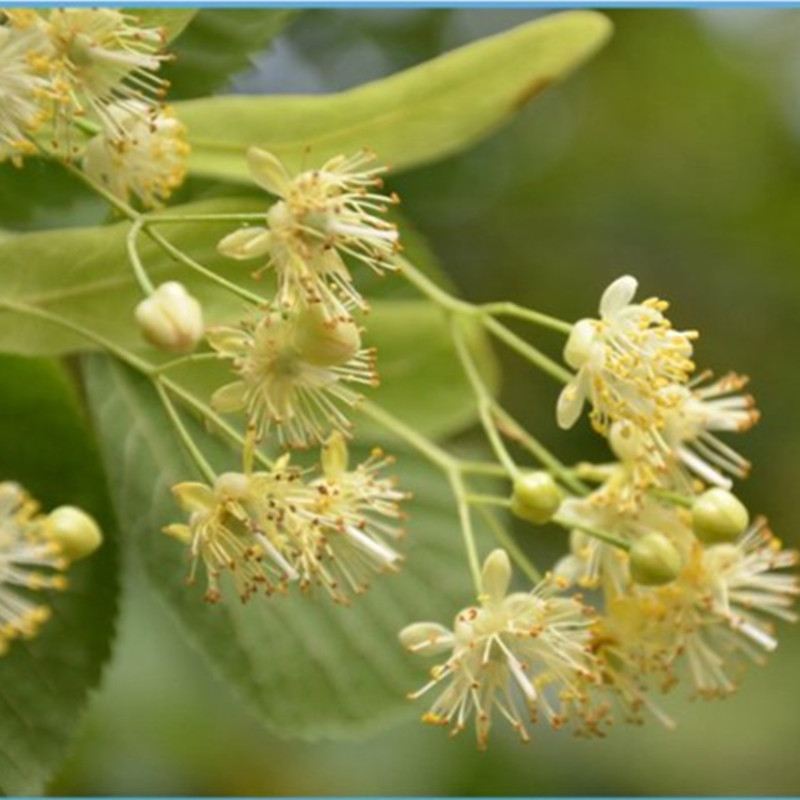
A deciduous tree, up to 20 meters tall, with gray bark that splits vertically. The twigs are nearly hairless, and the terminal buds are either hairless or slightly hairy. The leaves are ovate, 7-14 cm long and 5.5-9 cm wide, with a short pointed or gradually pointed tip and a single-sided heart-shaped or oblique base. The upper surface is hairless, while the lower surface initially has stellate hairs that later fall off, leaving hair tufts in the vein axils. The leaves turn gray or brownish-green when dry. The lateral veins are 6-7 pairs, with sparsely spaced small teeth along the upper edge. The petiole is 3-5 cm long and nearly hairless. The cymose inflorescence is 8-13 cm long and hairless. The pedicel is 7-9 mm long. The bract is narrowly oblanceolate, 10-16 cm long, 1.5-2.5 cm wide, and sessile, with a rounded or wedge-shaped base. The upper surface is usually hairless, while the lower surface has stellate hairs. The lower half of the bract, 5-7 cm long, is fused with the inflorescence stalk. The sepals are oblong-lanceolate, 5 mm long, with hairs on the outer surface and long hairs on the inner surface. The petals are 7-8 mm long. The staminodes are 6-7 mm long, and the stamens are 5 mm long. The ovary is hairy, and the style is 4-5 mm long. The fruit is spherical, 8-10 mm wide, without ridges, with small protrusions and stellate hairs. The flowering period is in July.
Growth Habits:
Tilia thrives in deep, fertile, and moist soils and can grow in valleys and slopes. It has deep roots, a moderate growth rate, and strong sprouting ability. Tilia prefers sunlight but is somewhat shade-tolerant in its early stages. It favors a cool, moist climate and often grows scattered in mixed forests of Korean pine and broadleaf trees. Tilia has strict soil requirements, preferring fertile, well-drained, and moist soils. It is resistant to cold, has strong toxicity resistance, and is rarely affected by pests.