







文章目录
Product Introduction

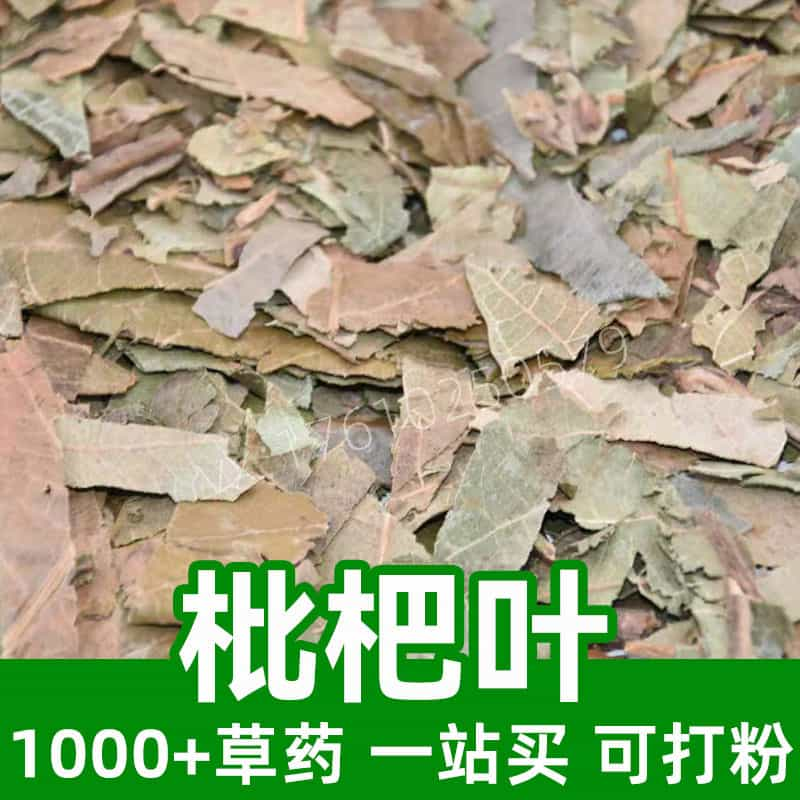
Loquat leaves are the leaves of the loquat plant from the Rosaceae family. Also known as Ba Ye and Lu Ju Ye. They have the effect of clearing the lungs, relieving cough, soothing the stomach, and quenching thirst. They are used to treat lung heat, coughing with phlegm, coughing up blood, nosebleeds, stomach heat vomiting, and other conditions. Loquat leaves are widely used in the pharmaceutical and food industries.
Product Characteristics
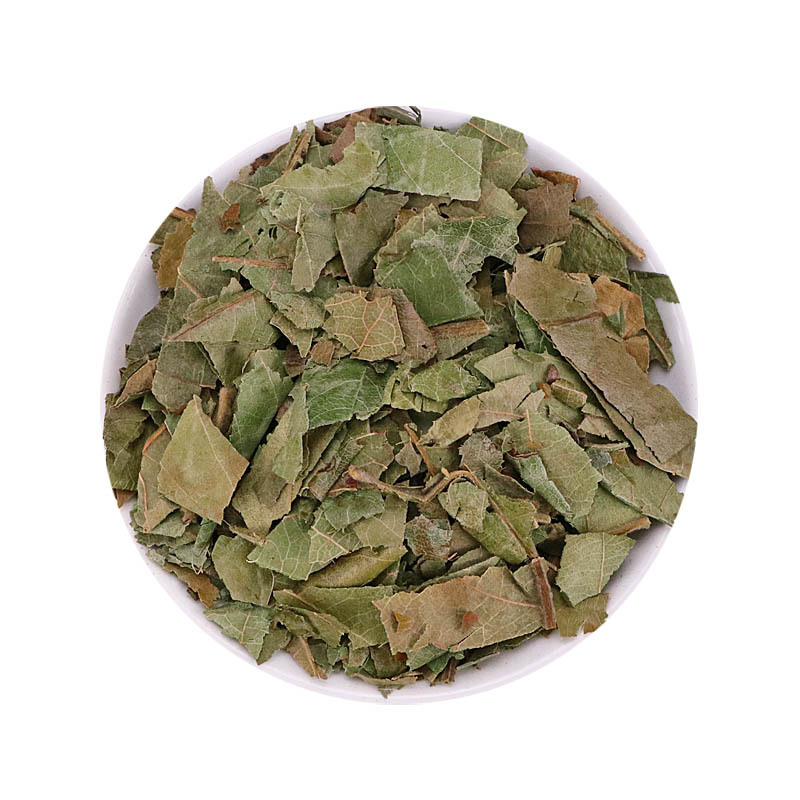
This product is oblong or obovate in shape, measuring 12-30 cm in length and 4-9 cm in width. The tip is pointed, and the base is wedge-shaped, with serrated edges near the base. The upper surface is grayish-green, yellow-brown, or reddish-brown and relatively smooth; the underside is densely covered with yellow hairs, with prominent main veins and pinnate side veins. The petiole is very short, covered with brownish-yellow hairs. The texture is leathery and brittle, and it breaks easily. The scent is faint, and the taste is slightly bitter.
Main Chemical Components
Contains amygdalin, ursolic acid, oleanolic acid, malic acid, citric acid, tannin, vitamin B1, etc.
- Volatile Oils
The main components of loquat leaf volatile oil are nerolidol and acacia alcohol, as well as pinene, camphene, myrcene, linalool, and their oxides.
- Triterpene Acids
Loquat leaves contain more than a dozen triterpene acid compounds, which are the main active ingredients in the leaves. These include ursolic acid, oleanolic acid, and other pentacyclic triterpenes. Researchers like Ju Jianhua have isolated six triterpene acid compounds from butanol extracts of loquat leaves, including oleanolic acid, 2α-hydroxy oleanolic acid, ursolic acid, 2α-hydroxy ursolic acid, pomolic acid, and rose acid.
- Sesquiterpenes
The sesquiterpenes in loquat leaves primarily exist as glycosides with glucose and rhamnose, forming chain and monocyclic sesquiterpenes.
- Flavonoids
The flavonoid aglycones in loquat leaves include kaempferol and quercetin, with the glycosides consisting of 1-3 monosaccharides, commonly glucose, rhamnose, galactose, and arabinose, often linked at the 3-position. Acetylated flavonoid glycosides are also present.
- Polyphenols
Loquat leaves contain various polyphenolic compounds, with flavonoids and flavan-3-ols as the primary components. These include chlorogenic acid, (-)epicatechin, procyanidin B-2, and procyanidin oligomers.
- Organic Acids
Loquat leaves contain organic acids such as tartaric acid, citric acid, and malic acid.
- Other Compounds
Loquat leaves also contain loquat glycosides and amygdalin. Amygdalin is a cyanogenic glycoside that can release trace amounts of hydrogen cyanide in the body through microbial enzyme action, which has a sedative effect on the respiratory center, producing an antitussive effect.
Efficacy and Functions
Efficacy: Clears the lungs, stops coughing, soothes the stomach, and relieves thirst.
Main Uses: Treats lung heat with phlegm, chronic cough, coughing up blood, nosebleeds, vomiting blood, stomach heat nausea, pregnancy vomiting, pediatric vomiting, diabetes, and facial skin conditions caused by lung heat.
Specific efficacy and functions of loquat leaves:
- Moisturizes the Lungs and Relieves Cough: From a traditional Chinese medicine dietary perspective, loquat leaves are slightly cold in nature and can effectively clear lung fire, alleviating dryness in the lungs that causes coughing, phlegm, coughing up blood, and shortness of breath. Thus, loquat leaves are beneficial for clearing lung fire, reducing lung dryness, and relieving cough, phlegm, bleeding, and shortness of breath.
- Enhances Appetite: Loquat leaves also effectively clear stomach fire, addressing issues like bad breath, poor appetite, nausea, vomiting, abdominal pain, and bloating caused by stomach heat, thereby enhancing appetite and aiding digestion.
- Promotes Bowel Movements: Loquat leaves also effectively clear excess heat and internal fire in the intestines. For those experiencing constipation or dry stools, consuming loquat leaves appropriately can help clear intestinal heat and fire, promoting bowel movements and relieving constipation.
Applications: Traditional Chinese Medicine, Food
- Traditional Chinese Medicine: Loquat leaf extract, various loquat leaf formulations, etc.
- Food: Loquat leaf porridge, mulberry leaf loquat tea, loquat lotus root.
Harvesting, Processing, and Preparation
Loquat trees are commonly grown near villages, on flat land, or on slopes. They are cultivated nationwide, with wild varieties found in Sichuan and Hubei. Harvesting can be done year-round. The leaves are dried until 70-80% dry, then bundled into small bunches and dried completely. Dried leaves should be stored in a dry place.
Harvesting and Processing: Harvesting can be done year-round, with most harvesting occurring in the summer. The leaves are dried until 70-80% dry, bundled into small bunches, and then dried completely. This method produces a product that is less likely to break and is of higher quality. Some also collect naturally fallen leaves for drying, which tend to be more purple.
Preparation Methods:
- Loquat Leaves: The standard method involves removing impurities and hairs from the raw material, moistening with water, cutting into threads, and drying. The raw product is commonly used for treating lung heat cough.
- Honey Loquat Leaves: The current method involves diluting refined honey with an appropriate amount of water, mixing it with loquat leaf threads, and allowing it to soak thoroughly. The mixture is then heated gently in a pan until it turns slightly yellow and no longer sticky, after which it is cooled. For every 100 kg of loquat leaves, 20 kg of refined honey is used. Honey loquat leaves are mainly used for dry cough due to lung dryness.
- Fried Loquat Leaves: The raw loquat leaves are placed in a pan and gently heated until slightly charred and fragrant, then cooled. Fried loquat leaves are mainly used for soothing the stomach and relieving nausea.
Plant Source

Loquat is an evergreen tree belonging to the Rosaceae family, subfamily Maloideae. The branches are thick, with rusty-colored or gray-brown hairs. The leaves are lanceolate, with gray-brown hairs on the petioles. The inflorescence is terminal, with the calyx tube shaped like a shallow cup. The fruit is spherical or oblong. Loquat is an important fruit crop in the Chaozhou area, with a flowering period from October to December and a fruiting period from May to June.
Plant Characteristics: Evergreen small tree, about 10 meters tall; branches thick, yellow-brown, densely covered with rusty or gray-brown hairs. The leaves are leathery, lanceolate, obovate, or elliptical, 12-30 cm long, 3-9 cm wide, with an acute or gradually pointed apex, wedge-shaped or gradually narrowing into a petiole at the base, with sparse serrations on the upper edge. The upper surface is mostly wrinkled, while the underside and petiole are densely covered with gray-brown hairs, with 11-21 pairs of lateral veins; petioles 6-10 mm long. The terminal panicles, peduncles,